
Modeling
-
Semantic Model Optimization: Theory, Tips and Tools

Here is a talk I gave at the Vancouver Fabric & Power BI User Group on Semantic Model Optimization: Continue reading
-
Identifying Semantic Model Capacity Spikes Using Workspace Monitoring
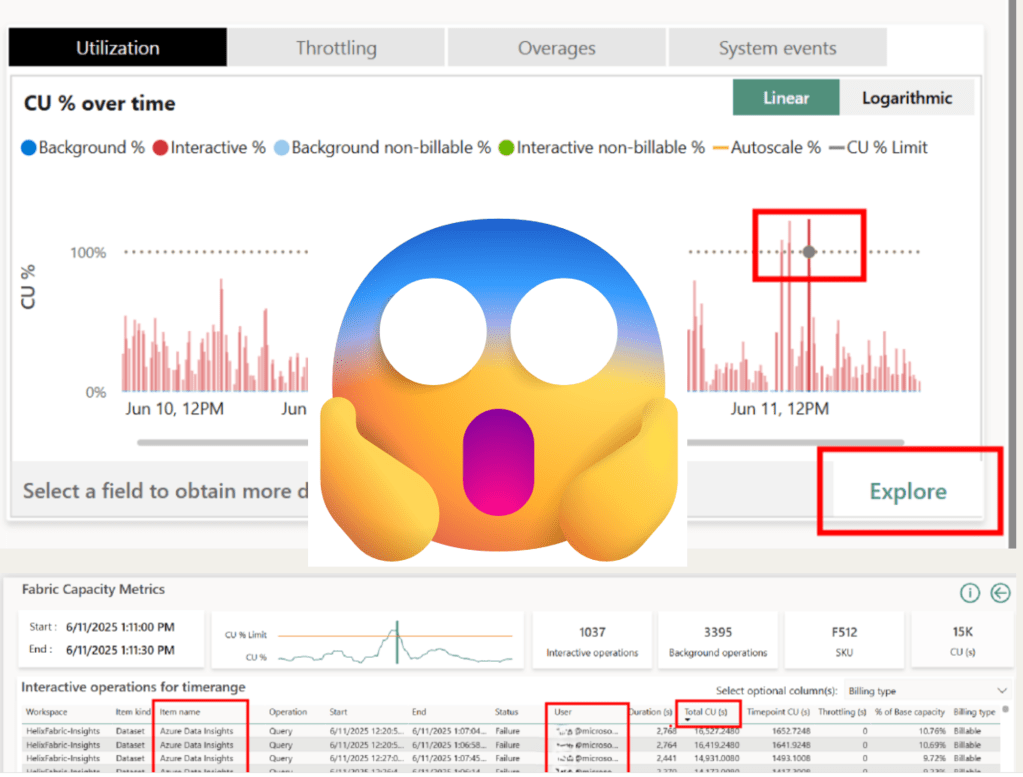
Introduction Part of my role is to monitor our team’s Fabric capacity utilization, and one of the main tools we use is the Capacity Metrics app. I’m sure this never happens to you 😉, but our semantic models sometimes cause our utilization to cross the 100% threshold. Unfortunately, getting the details you need to identify Continue reading
-
Extracting Semantic Model Source Tables with Fabric Notebooks

Introduction In an internal Microsoft Fabric support channel, someone asked, “My customer has multiple workspaces, each containing several semantic models. They are looking for a way to list all tables within each semantic model without manually opening each one.” Described below is an easy way to extract all of the source tables from multiple semantic Continue reading
-
Fabric Toolbox: Semantic Model Audit
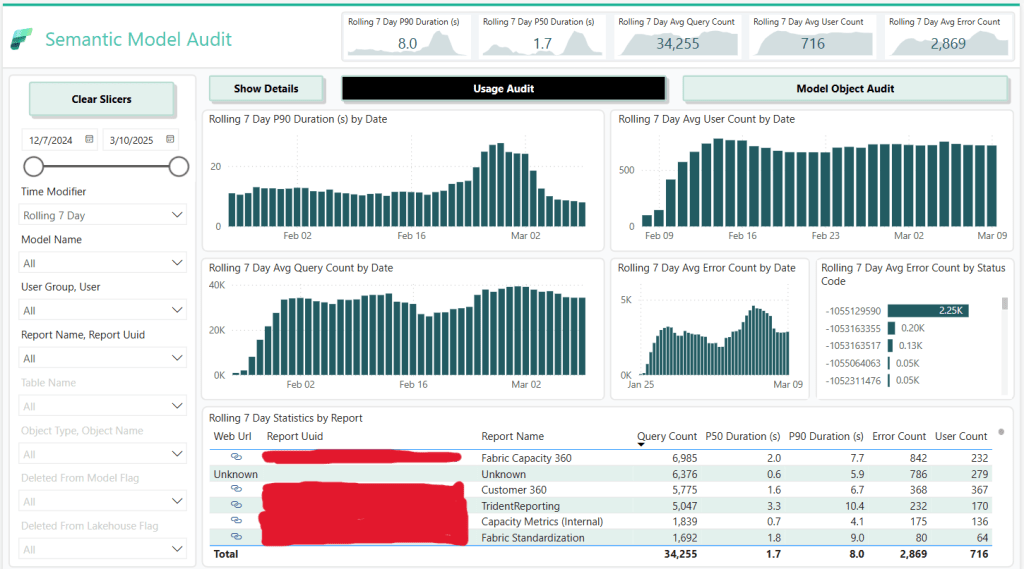
Introduction Another role of the Azure Data Insights & Analytics team is building and maintaining the internal analytics and reporting for Azure Data. My job is to develop, maintain and optimize the Semantic Models that support our reporting. In order to monitor and audit our models’ performance, we developed a tool called Semantic Model Audit, Continue reading
-
Optimizing Rolling Distinct Count Measures

Introduction In my new role in Azure Data, I have spent a lot of time optimizing the performance of semantic models and DAX measures. One of the types of calculations we frequently use is 28-day (or 7-day) rolling distinct counts in order to see how our business is growing over time. In this post, I Continue reading
-
Creating User-Driven Default Slicer Selections

Introduction Recently, in an internal Power BI help forum, someone asked if there was a way to force a slicer’s default selection to be based on a particular user’s sign in. I thought it was an interesting challenge and wanted to share my proposed solution here. The Requirements The requirements were: To simplify the demo, Continue reading
-
Reducing Semantic Model Size with Creative Solutions
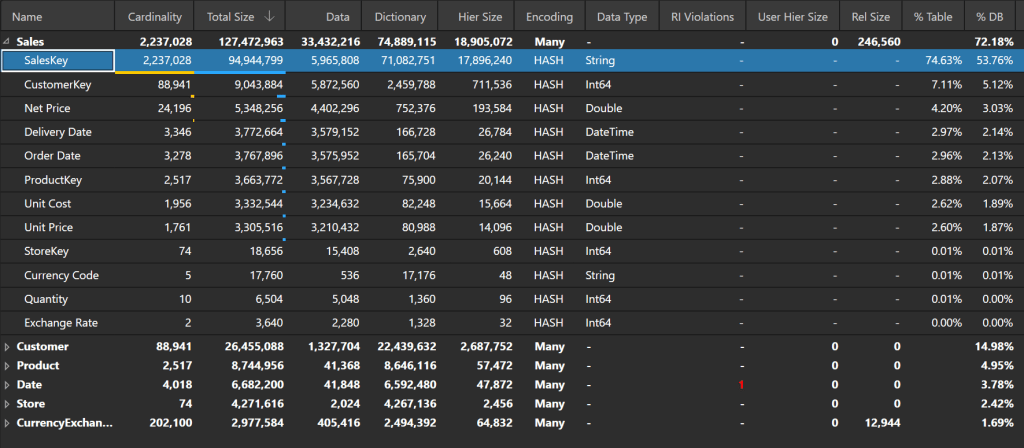
Introduction When working with larger semantic models, one of the things you are constantly trying to do is to reduce the model size while still meeting stakeholder requirements. Smaller models often result in faster queries, and you need to keep models under a certain size to stay within capacity memory limits. One common problem child Continue reading
 DAX Noob